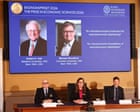
Two US economists won the 2026 Nobel Prize in Economic Sciences for developing models that help central banks and governments stabilise economies and avoid severe recessions and runaway inflation.
Robert Hall of Stanford University and Michael Woodford of Columbia University received the award for their work on "microeconomic foundations of macroeconomic stabilisation," according to the Nobel Prize committee. Their models provide policymakers with tools to smooth economic cycles.
Hall and Woodford's research enables central bankers and finance ministers to better understand how individual economic actors respond to policy changes, then use those insights to design interventions that reduce economic volatility. The committee framed their contribution as advancing the toolkit available to authorities managing inflation and employment.
The prize recognised their theoretical contributions to economics during a period when central banks globally faced intense pressure managing inflation, supply shocks and employment levels following major economic disruptions.